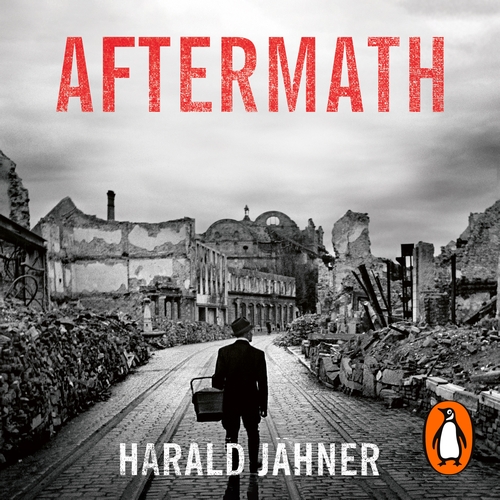
This is a great book translated from the German. It is focused on the “No Man’s Years” 1945- 1949 before establishment of the Federal Republic and DDR. The phrase “No Man’s Years” is adapted from the territorial “No Man’s Land”. Throughout there are insights into how the Germany which embraced Naziism and fought the war became divided between the Bundesrepublik and DDR,how German culture changed and the differences between the sexes and generations.
In the hunger winter 1946/7 Germans expected because of unconditional surrender that the allies were responsible for them. There was an attitude that anything which was not attributed to a particular individual could be taken. There was trade in goods meant to be for refugees. Jähner writes that a country without a proper government can be pleasant. Black marketeers sold goods on the street, the goods adulterated and sold without controls on their quality. Cigarettes became currency, promoted as they suppressed hunger. There was a refusal to face up to what had happened. In the American zone all administrators who had been in the Party before 1937 were removed. In 1951 officials who had been removed by the Allies were re-instated, so a whole cohort of former Nazi officials were re-instated. There was international interest in the Nuremburg trials, but not in Germany. Officials ensured their pensions took into account service during years under the Nazi regime. The Germans closed ranks.
There was joy and wildness, but limited feelings of guilt. Instead the Germans thought that they were victims.
60m had died. There were huge problems with refugees. 12m Germans were expelled from the east. They came to make up 16% of those in West Germany, 25% in the DDR. They had difficulties in putting down roots. They were often unwelcome. There was an increase in regionalism and localism in place of loyalty to the unified volk. There were 10m demobbed soldiers and at least as many bombed out residents. The soldiers were dispirited, dutiful and disciplined, the brutalised Displaced Persons (DPs) were not.
There were difficulties with returning soldiers. In some cases, they were unaware of the damage done at home. Women had taken over. The children stole and scrounged. Fathers were often alienated from wives and children. They felt doubly responsible for starting the war and then losing it, which weighed more heavily than their involvement in Nazi crimes. Both husbands and wives felt their contribution was unappreciated. Many marriages didn’t last, often made on short leave from the front, sometimes at the beginning of the war in the flush of victory.. There were generational conflicts before the 1960s when generational conflict in Germany in particular was aimed at the protestors’ parents.
There were fraudsters and confidence tricksters, everywhere people who had come from nowhere, the shortage economy coming before the economic miracle. Columns of cyclists went into the country in search of food. Cologne Cardinal Frings justified theft to survive , leasing to the phrase fringsing “Anyone who wasn’t freezing stole.” Everyone was fighting everyone else, the time of wolves.
In 1947 the British withdrew support from Greek royalists, which was followed by the Marshall Plan, beneficiaries UK 3.2bn $ France 2,7, Italy 1,5, Germany 1.4. You ask why at this stage didn’t the UK join the precursors to the EU.
In 1948 there was a switch from R-mark to D-mark with strict limits on amounts which could be converted hitting the black marketeers. It forced the split of the Bundesrepublik and DDR, which couldn’t afford to support an equivalent exchange. The Soviets tried to impose its currency on the whole of Berlin, which was opposed by the Western Allies in their zone leading to the blockade of West Berlin and the Berlin airlift.
Ulbrich the DDR Leader had been in Moscow since 1937. In 1953 there was an uprising by Im in the DDR protesting against poverty and Sovietisation.
 Of Books, Bikes & Islands